




Organizing Online Seminars: A Professional A–Z Process
In practice, organizing online seminars (webinars) is only truly effective when operated according to a standard, synchronized process across content, technology, communication, and measurement. The lack of a clear implementation framework can easily lead to technical issues, low attendance, low interaction, and failure to generate business value after the event.
This article presents a professional A-Z process for organizing online seminars, helping businesses fully visualize the necessary steps before, during, and after the event; it also serves as an important reference document when choosing a reputable event organizing unit for long-term campaigns.
Define objectives and target audience
Every successful online seminar begins with clearly defined objectives. Businesses need to clarify whether the seminar aims to build brand, train, generate leads, or support sales. Each objective will determine different approaches to content creation, script development, and communication strategies.
Parallel to this is sketching the attendee's profile. Understanding who they are, what problems they face, and what value they expect from the seminar helps keep the content focused, avoids rambling, and retains viewers until the end of the program.
Develop concept and script for the online seminar
The concept is the "backbone" of the entire event. A good concept needs to closely address the actual problems of the attendees, have a consistent message, and clearly demonstrate the value the business provides. From the concept, a detailed script is built with a clear structure, including an introduction, main content, interaction, and calls to action at the end of the program.
The online seminar script is not only for the speakers but also a coordination document for the technical and communication teams, helping all departments cooperate smoothly during operation.

Choose a platform and prepare technical infrastructure
The platform for organizing online seminars should be chosen based on the event's scale, estimated number of attendees, and desired level of interaction. Besides stability, businesses need to consider recording capabilities, security, and integration with other marketing tools.
Technical infrastructure includes internet connection, audio-visual equipment, presentation slides, and backup plans. Technical testing before the event is a mandatory step to ensure a smooth user experience and avoid interruptions during the seminar.
Implement pre-online seminar communication
Communication is a decisive factor in the quantity and quality of attendees. A professional online seminar needs a clear registration landing page, persuasive content, and specific CTAs. Popular communication channels include websites, social media, email marketing, and advertising.
The communication process needs to be implemented according to a reasonable roadmap, combined with automatic reminders to increase actual attendance rates. This is the stage where many businesses choose to cooperate with a professional event organizing unit to ensure effective outreach to the right audience.
Operation and coordination throughout the seminar
During the online seminar, the coordination team plays a central role, ensuring the program runs according to the script, promptly handling unforeseen situations, and facilitating interaction with attendees.
Managing the chat, questions, surveys, and interactive activities helps increase engagement and provides important data to evaluate content quality and viewer interest.
Data collection and performance measurement after the seminar
After the seminar concludes, all data needs to be compiled and analyzed in detail. Key metrics often include the number of registrations, actual attendance rate, average viewing time, interaction level, and post-event behavior.
Data analysis not only helps evaluate seminar effectiveness but also serves as a basis for optimizing subsequent marketing campaigns. Seminar content can be reused as articles, videos, emails, or training materials, increasing long-term value for the business.
Common mistakes when organizing online seminars
Many businesses organize online seminars but fail to achieve effectiveness due to a lack of standard processes, insufficient content depth, or ineffective communication. Some experience technical issues due to not testing in advance or not having backup plans.
Early identification of risks and choosing experienced implementation partners helps businesses minimize errors and optimize effectiveness from the very first organization.
The role of a professional online seminar organizing unit
A reputable event organizing unit not only supports the technical aspects but also accompanies the business from content strategy, communication to performance measurement. This ensures that the online seminar is not just a "completed event" but becomes part of the overall marketing system.
With experience in implementing marketing projects and digital events, MIMADIGI builds a systematic online seminar organizing process, focusing on content value and conversion efficiency for businesses.
Popular Online Seminar Formats Today
In the process of organizing online seminars, choosing the right format plays a decisive role in attracting attendees, effectively conveying content, and post-event conversion capability. Each online seminar format is suitable for a different business objective, industry, and customer segment.
This article helps businesses understand the popular online seminar formats today, thereby choosing the appropriate model and optimizing efficiency when working with a reputable event organizing unit.
Online training and coaching seminars
Online training seminars are widely used in businesses, educational organizations, and skill training units. The content focuses on sharing specialized knowledge, work processes, practical skills, or development orientation for internal teams and customers.
A major advantage of this format is its ease of implementation, reasonable cost, and ability to be organized in regular series. When professionally scripted, online training seminars help improve attendees' capabilities and foster long-term brand engagement.
Online product and service introduction seminars
This is an online seminar format adopted by many businesses in marketing and sales campaigns. The content focuses on presenting solutions, introducing features, product demos, and answering potential customer queries.
Product introduction seminars help businesses reach the right group of interested customers, build trust, and shorten the purchase decision journey. When implemented by a professional event organizing unit, this format yields higher conversion rates compared to traditional advertising channels.

Talk shows and online forums with experts
Online talk shows and forums are seminar formats that involve multi-directional dialogue and exchange between experts, speakers, and attendees. The content often revolves around current affairs, industry trends, or issues of community interest.
This format helps businesses build an expert image, enhance brand prestige, and create a community connection space. With flexible organization, online talk shows are suitable for both brand communication and nurturing potential customers.
Online customer conferences
Online customer conferences are often organized to show appreciation, update information, or announce new strategies to existing customer groups. This format helps businesses maintain relationships, increase engagement, and strengthen customer trust.
Compared to offline conferences, online customer conferences significantly save organization costs while still ensuring interaction and message delivery if content and technical aspects are thoroughly prepared.
Online seminars combined with sales
This is a seminar format designed to both provide valuable information and lead attendees to make a purchase or sign up for a service. The content often begins with knowledge sharing, then subtly introduces suitable solutions.
When implemented correctly, online seminars combined with sales do not feel overtly promotional yet yield clear conversion effectiveness. This model is chosen by many businesses in new product launch campaigns.
Hybrid model combining online and offline
A hybrid event is a combination of an online seminar and a live event at a physical location. This format is suitable for large-scale events, customer conferences, or product launch programs requiring the presence of an important group of guests.
The hybrid model helps businesses expand their reach while still maintaining a direct experience for on-site attendees. However, this format requires thorough preparation and high operational capability from a professional event organizing unit.
Which online seminar format should businesses choose?
The choice of online seminar format should be based on business objectives, target audience, and implementation budget. Small businesses can start with training seminars or service introductions, while large businesses can implement talk shows, customer conferences, or the hybrid model.
Consultation from an experienced unit will help businesses avoid choosing the wrong format and optimize investment efficiency for each seminar.
The role of a professional online seminar organizing unit
Each online seminar format has its specific characteristics regarding content, technology, and communication. Collaborating with a reputable event organizing unit helps businesses develop suitable scripts, ensure stable operation, and fully exploit data value after the event.
With experience in implementing marketing solutions and digital events, MIMADIGI supports businesses in choosing and organizing online seminars that align with objectives, formats, and aim for long-term effectiveness.
Effective and Sustainable Marketing Strategy for Online Seminars
For an online seminar to truly bring business value, businesses need to view webinars as a complete marketing campaign, not a standalone broadcast. From subject positioning, attracting registrations, retaining attendees to conversion and nurturing after the event, every touchpoint requires a clear strategy.
This article presents a practical marketing strategy for online seminars, helping businesses optimize efficiency when collaborating with a reputable event organizing unit, while maximizing the use of data and content generated from the event.
Online seminars in the overall marketing picture
Online seminars serve as a central touchpoint in the digital marketing ecosystem. This is where businesses demonstrate expertise, build trust, and collect high-quality data. When positioned correctly in the strategy, webinars strongly support channels such as SEO, Ads, Email, and Sales.
Instead of organizing sporadically, businesses should build a series of topic-based seminars, creating a continuous content flow to nurture potential customers over time.
Define marketing objectives for online seminars
Before implementation, it is crucial to clearly define the seminar's objective. For brand building, content should focus on sharing knowledge, trends, and real-world cases. For lead generation, the value of participation and immediate benefits upon registration need to be clarified. For sales objectives, the content strategy and CTAs should be subtly designed to avoid overtly promotional feelings.
Defining objectives from the outset helps guide all communication activities and accurately measure effectiveness after the event.
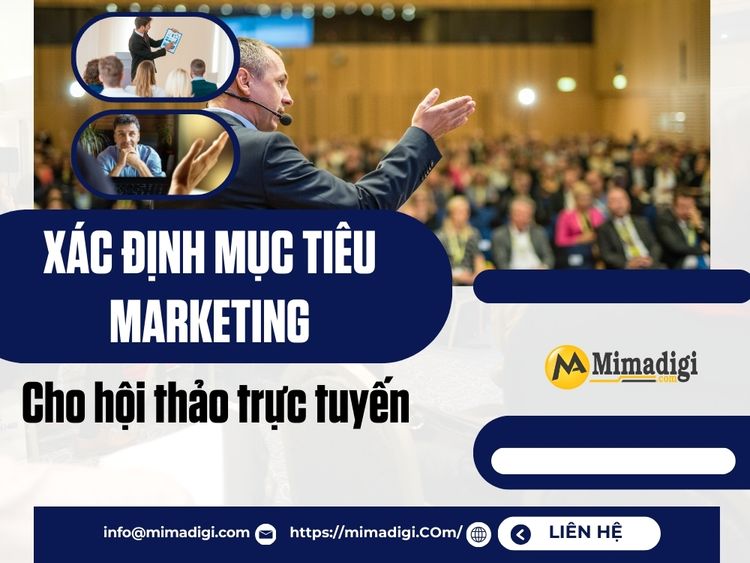
Develop messages and topics that attract the right audience
The message of the online seminar needs to closely address the actual problems customers are facing. A good topic often answers the question, "What will attendees solve after watching?". The clearer the message, the higher the registration and actual attendance rates.
Businesses should avoid overly general topics. Instead, specify them with situations, results, or in-depth perspectives to differentiate from other seminars in the market.
Strategy to attract online seminar registrations
The pre-event phase largely determines the success of the seminar. The registration landing page needs to be clearly designed, focusing on benefits, speakers, and main content. Communication content should be implemented multi-channel, including websites, social media, email marketing, and advertising.
Appropriate allocation of communication time helps increase awareness and remind registrants. Automated reminders before the event significantly improve actual attendance rates.
Retaining attendees throughout the seminar
An effective marketing strategy is not just about attracting registrations but also about retaining viewers until the end of the program. Seminar content should be divided into short sections, interspersed with interactions such as surveys, Q&A, or mini-games to maintain focus.
Clear narration, intuitive slides, and appropriate program pacing are crucial factors that make attendees feel their time is valued.
Optimize conversion and CTA in online seminars
CTA is a crucial touchpoint to convert attendees into customers or quality leads. CTAs can include downloading materials, signing up for consultations, receiving offers, or joining community groups. The timing of CTAs needs to be natural, linked to the recently shared content to avoid disrupting the experience.
An online seminar implemented by a professional event organizing unit will have a clear CTA script, suitable for each marketing objective and attendee behavior.
Data exploitation and remarketing after the seminar
After the seminar concludes, the collected data is an invaluable asset. Registration information, attendance duration, interaction level, and viewer questions help businesses better understand actual customer needs.
Based on this data, businesses can implement remarketing campaigns, nurturing emails, and personalized consultations. Recorded seminar content can also be reused for websites, social media, and subsequent advertising campaigns.
Online seminars in the sales funnel
In the sales funnel, online seminars are typically in the consideration and decision-making stages. This is when customers need trust and compelling evidence before taking action. Providing valuable content, directly answering questions, and presenting suitable solutions help shorten the purchase journey.
When closely integrated with the sales team, online seminars become an effective and sustainable sales support tool.
The Role of an Online Seminar Organizing Unit in Marketing Strategy
A reputable event organizing unit not only provides technical support but also collaborates with businesses in building an overall marketing strategy for online seminars. From topic positioning, communication, operation to measurement and optimization, all stages are implemented synchronously.
With strengths in marketing, content, and technology, MIMADIGI supports businesses in transforming online seminars into tools for lead generation, brand building, and long-term growth.
Technology & Platforms for Effective Online Seminars
In organizing online seminars, technology and operational platforms directly determine the attendee experience, program stability, and the ability to measure effectiveness after the event. Choosing the right platform not only ensures a smooth seminar but also creates a significant advantage for marketing, sales, and customer service.
This article analyzes in detail the core technological elements, criteria for platform selection, and how to integrate systems for businesses to implement online seminars effectively when working with a reputable event organizing unit.
The role of technology in online seminars
Technology is the "backbone" of online seminars. A stable system ensures clear images and audio, reduces interruptions, and retains attendees. Additionally, technology supports data collection, behavior analysis, and automation of post-event marketing processes.
When implemented systematically, an online seminar platform does not just serve a single broadcast but becomes part of the digital marketing ecosystem.

Criteria for choosing an online seminar organizing platform
A suitable platform needs to ensure stable operation with the projected number of attendees, support recording, screen sharing, and real-time interaction. Security is also very important, especially for internal seminars or events for VIP customers.
The ability to integrate with landing pages, email marketing, and CRM helps businesses control the entire user journey. This is a crucial criterion when choosing a professional event organizing unit to implement long-term online seminars.
Popular online seminar organizing platforms
Zoom is a widely used platform thanks to its user-friendly interface, stability, and support for a large number of attendees. Zoom is suitable for various seminar formats, from training and product introductions to expert talk shows.
Google Meet offers the advantages of ease of use and good integration with the Google ecosystem, suitable for small to medium-sized seminars or internal training.
Microsoft Teams is often used in corporate environments, supporting teamwork, high security, and good integration with internal management systems.
Specialized webinar platforms provide many advanced features such as registration landing pages, email automation, detailed data analytics, and marketing support, suitable for in-depth online seminar campaigns.
Technical infrastructure needed for online seminars
Besides the platform, technical infrastructure includes a stable internet connection, quality audio-visual equipment, and a suitable presentation space. Technical testing before the event helps detect risks early and ensures a seamless user experience throughout the program.
For large-scale seminars, backup plans for internet connection and equipment are indispensable to minimize interruptions.
Integrate landing pages and registration systems
The landing page serves as the first touchpoint for attendees. An effective landing page needs to clearly present the seminar content, benefits of attendance, and speaker information, while also being optimized for SEO and conversion.
Integrating the landing page with the seminar platform helps synchronize registration data, reduce manual operations, and increase accuracy in managing attendee lists.
Email automation and automatic reminders
Email automation is a crucial tool to increase actual attendance rates. The automated email system sends registration confirmations, event reminders, and post-seminar materials, helping businesses maintain connection with attendees.
When properly designed, email automation not only supports seminars but also becomes an effective channel for nurturing potential customers.
Integrate CRM and customer data management
Connecting the online seminar platform with CRM helps businesses store and categorize customer data by attendance behavior. This information supports marketing and sales teams in nurturing, consulting, and remarketing after the event.
Data from online seminars typically has high accuracy, reflecting customers' actual interest levels.
Tools for measuring and analyzing seminar effectiveness
Metrics such as the number of registrations, attendance rate, average viewing time, and interaction level help businesses evaluate seminar quality. Analyzing this data serves as a basis for optimizing content, scripts, and marketing strategies for subsequent seminars.
Measurement technology also helps businesses demonstrate their return on investment when implementing online seminars long-term.
The Role of an Online Seminar Organizing Unit in Technology Implementation
Choosing and integrating appropriate technology requires practical experience and systematic thinking. A reputable event organizing unit will advise on platforms suitable for the business's objectives, scale, and budget, while ensuring stable operation throughout the program.
With strengths in marketing, technology, and digital event operations, MIMADIGI supports businesses in implementing online seminars synchronously from platform, infrastructure to measurement and optimization of effectiveness.
Frequently Asked Questions When Organizing Online Seminars
When businesses start exploring and implementing online seminars, many questions often arise regarding costs, effectiveness, technology, and measurement methods. Clearly answering these questions helps businesses make sound decisions and choose a reputable event organizing unit suitable for long-term objectives.
This article summarizes frequently asked questions about online seminars, adhering to the actual search needs of businesses and customers.
Are online seminars suitable for all types of businesses?
Answer: Online seminars are suitable for most types of businesses, from small businesses and startups to large corporations. Thanks to flexible costs and easy scalability, online seminars can be adapted to different industries, objectives, and budgets.
Should small businesses organize online seminars?
Answer: Small businesses should definitely implement online seminars because it is a cost-effective marketing format that yields high results. As long as the content meets customer needs and the implementation process is systematic, online seminars can still generate quality leads and enhance brand reputation.
How much does it cost to organize an online seminar?
Answer: The cost of organizing an online seminar depends on the event's scale, the platform used, the number of attendees, and the investment in content and communication. Compared to offline events, costs are usually significantly lower but still ensure effectiveness if implemented correctly.
What is a reasonable duration for an online seminar?
Answer: The most common and effective duration usually ranges from 60 to 90 minutes. This period is sufficient to convey valuable content, interact with attendees, and implement CTAs without causing fatigue or loss of focus.
How to increase the actual attendance rate?
Answer: To increase attendance, businesses need to clearly communicate the seminar's benefits, send automated reminders before the event, and optimize the registration experience. Collaborating with a professional event organizing unit helps control these important touchpoints well.
Can online seminars measure effectiveness?
Answer: Online seminars allow for very detailed measurement of metrics such as the number of registrations, attendance rate, average viewing time, interaction level, and post-event behavior. This data helps businesses accurately assess effectiveness and optimize subsequent campaigns.
Can online seminars be recorded for reuse?
Answer: Absolutely. Recorded content from online seminars can be reused for websites, email marketing, social media, or as internal training materials, increasing long-term value for the business.
Do online seminars support sales?
Answer: Yes. When content and CTAs are appropriately designed, online seminars are a very effective sales support tool, especially when customers are in the consideration and decision-making stages.
What do businesses need to prepare before organizing an online seminar?
Answer: Businesses need to clearly define objectives, target audience, main content, and coordinate with the organizing unit to prepare the script, technical platform, communication, and post-event measurement plan.
Should I organize myself or hire an online seminar organizing unit?
Answer: If a business lacks experience and specialized staff, hiring a reputable event organizing unit will save time, minimize risks, and ensure overall effectiveness. A professional unit will support from strategy and technology to measurement and optimization.
Why choose a professional online seminar organizing unit?
Answer: A professional event organizing unit not only ensures stable technology but also advises on content strategy, communication, and conversion, helping online seminars bring real business value instead of just being event organization.
How does MIMADIGI support organizing online seminars?
Answer: MIMADIGI provides comprehensive online seminar organizing services, from strategy building, content scripting, technology implementation, communication to post-event measurement and optimization, helping businesses effectively leverage online seminars in the long term.
Organizing Online Seminars – A Modern Event Solution for Businesses
In the digital era, organizing online seminars has become a strategic tool that helps businesses expand their reach, optimize costs, and accurately measure marketing effectiveness. When implemented systematically, an online seminar is not just an online event but a central "touchpoint" in the marketing-sales-customer service funnel.
This pillar article synthesizes all core knowledge, processes, strategies, and technologies necessary for businesses to implement online seminars effectively, while also serving as a traffic director for the entire built SILO cluster.
What is an online seminar and its role in business strategy?
An online seminar is a form of event organized on a digital platform, allowing speakers and attendees to interact in real-time via video, audio, chat, surveys, and Q&A. Compared to traditional events, online seminars help businesses reduce costs, remove geographical limitations, and collect detailed user data.
In modern business strategy, online seminars are used to build brand, train, generate leads, support sales, and maintain relationships with existing customers.

Outstanding benefits of organizing online seminars
Online seminars help businesses reach the right target audience with optimized costs. Detailed measurement of attendee behavior such as viewing time, interaction level, and feedback helps businesses accurately evaluate the effectiveness of each campaign.
Additionally, seminar content can be recorded and reused for various marketing channels, increasing long-term value. This is why more and more businesses choose to collaborate with a reputable event organizing unit to implement professional online seminars.
Popular online seminar formats
Online training and coaching seminars are suitable for businesses and educational organizations. Product and service introduction seminars help increase conversion rates and shorten the purchase journey. Online talk shows and forums help build an expert image and community. The hybrid model combining online and offline is suitable for large-scale events.
Each format has its specific characteristics and needs to be chosen to align with business objectives.
Professional online seminar organizing process
The standard process begins with defining objectives and the target audience, followed by developing the concept and content script. The platform and technical infrastructure are chosen based on the event's scale and security requirements.
Pre-event communication activities help attract registrations, while in-event operation and coordination ensure a smooth experience. After the event, data is compiled and analyzed to optimize subsequent marketing strategies. This process has been detailed in the satellite articles of the SILO cluster.
Marketing strategy for online seminars
Online seminars need to be placed within the overall marketing picture. From message development, attracting registrations, retaining attendees to CTAs and remarketing after the event, every stage requires a clear strategy.
When implemented correctly, online seminars become a tool for generating quality leads and supporting sustainable sales.
Technology and platforms for online seminars
Technology determines user experience and the ability to measure effectiveness. Integrating the seminar platform with landing pages, email automation, and CRM helps businesses control the entire customer journey and maximize data exploitation.
This is a key factor when businesses choose a professional event organizing unit to implement long-term online seminars.
Application of online seminars by industry
B2B businesses use online seminars to share solutions and train customers. The education sector organizes online classes and workshops. Real estate, finance, healthcare, and technology leverage online seminars to consult, introduce products, and build customer trust.
Why choose MIMADIGI to organize online seminars?
MIMADIGI implements online seminars with an overall marketing mindset, combining content, technology, and communication to deliver real business effectiveness. Clear workflow, a multi-disciplinary team, and transparent measurement capabilities help MIMADIGI be highly regarded as a reputable and professional event organizing unit for businesses.
Organizing online seminars is a modern event solution, aligned with the trend of digital transformation and data marketing. When implemented systematically, online seminars not only help businesses effectively convey messages but also create sustainable business value in the long term.
MIMADIGI Contact Information
- Address: 31/3B Thoi Tu 1 Hamlet, Dong Thanh Commune, Ho Chi Minh City, Vietnam
- Phone number: 0909 035 333
- Email: info@mimadigi.com
- Website: https://mimadigi.com/










Share your review