

















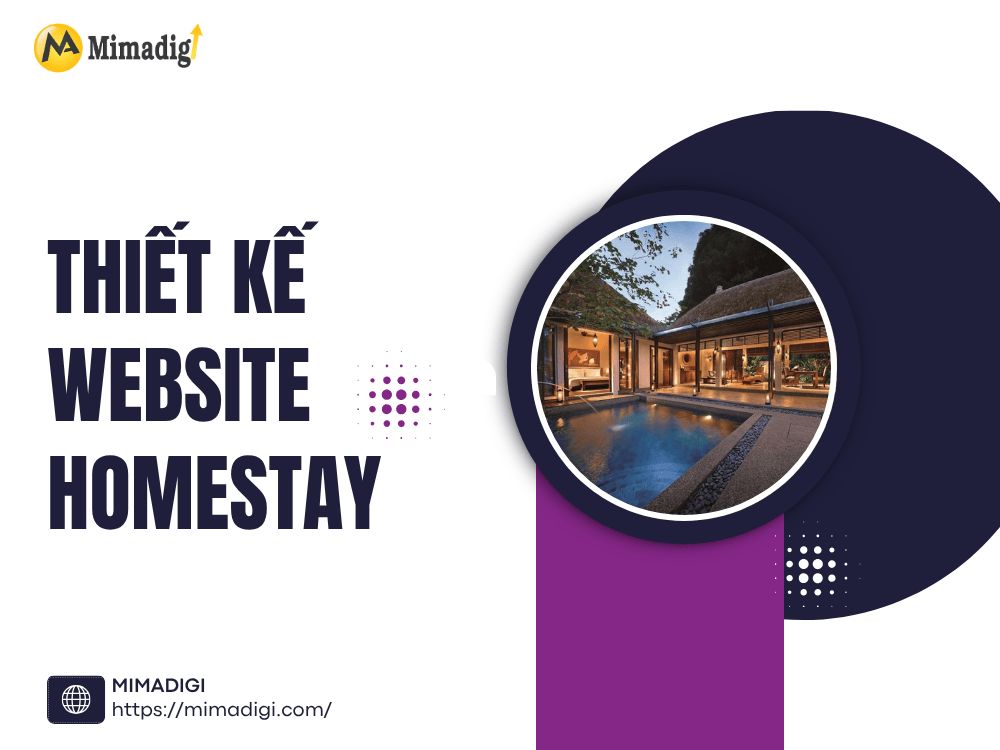
Overview of Homestay Website Design
When designing a website for a homestay, the goal is to create a robust and professional platform that allows homestay owners to easily reach customers, provide service information, and manage the booking process effectively. In the digital age, owning a website for your homestay not only increases your online presence but also helps to grow revenue and build brand awareness. A beautiful, user-friendly website, especially one that is designed with SEO in mind, will help your homestay stand out in today's competitive market.
A homestay website is where customers can learn about services, rooms, amenities, and unique experiences that the homestay offers. Additionally, it helps you easily reach search engines and attract potential customers from online platforms.
Why is website design necessary for a homestay?
A homestay website is not just a brand promotion tool, but also a direct channel that allows customers to find information, book rooms, and pay online. In particular, when designing a website according to requirements and optimizing it for SEO, the website will bring many benefits, including:
- Increased customer reach: Your website helps your homestay appear on search engines when customers search for keywords related to accommodation services.
- Save time and costs: Customers can easily book rooms online without having to call or go to the location, helping you save costs and time processing transactions.
- Create impression and trust: A website that is designed with SEO in mind and looks beautiful helps build a professional image, creating trust from customers when they first approach.
With features such as online booking, secure payment, and providing complete information about services, your website not only enhances the customer experience but also helps increase revenue and expand the homestay's reach.
Benefits of an SEO-friendly website for homestays
An SEO-friendly website will help your homestay achieve a high ranking on search engines like Google, making it easier to reach potential customers. The benefits of having an SEO-friendly website for a homestay include:
- Increased visibility on Google: A website optimized for SEO top Google helps your homestay appear on search engine results pages when customers search for related keywords such as “homestay near the beach”, “resort”, “homestay booking”...
- Attract natural customers: SEO helps you attract natural traffic from search engines without having to spend too much on advertising.
- Improve conversion rates: When the website has a stable amount of natural traffic, the likelihood of customers converting from visitors to bookers will be higher.
By designing an SEO-friendly website and optimizing content, you will not only improve your ranking on Google but also create a platform that helps customers easily find and decide to use your homestay's services.
Optimizing a homestay website for SEO
To SEO top Google, a homestay's website needs to be optimized not only for content but also for technical factors such as page loading speed, mobile compatibility, and keyword optimization. Applying SEO strategies will help increase the website's visibility on search engines, thereby attracting more customers.

SEO strategies for homestay websites
Optimizing SEO for a homestay website is very important to increase customer numbers and revenue. Basic SEO strategies that you need to apply include:
- Keyword research: Choosing keywords appropriate to the homestay's services helps the website easily appear on search engines. These keywords need to be optimized in the title, description, and content of the website.
- Optimize page loading speed: The website needs to load quickly to create a good user experience and avoid being penalized by Google. Page speed also directly affects SEO rankings.
- Create quality content: Write articles, blogs, or travel guides related to your homestay's services. Attractive and useful content will attract customers and improve SEO.
- Build quality links (Backlinks): Creating links from other reputable websites helps improve the website's credibility and ranking on Google.
With these SEO services, you can design an SEO-friendly website for your homestay, helping your website appear in high positions in search results and attract potential customers.
Keyword and content optimization on the website
Optimizing keywords and content is the most important factor when designing an SEO-friendly website for a homestay. To achieve a high ranking on Google, you need to use strategic keywords in important parts of the website, thereby helping Google understand your content and correctly classify potential customers.
- Keyword Optimization: Main and secondary keywords should be used naturally and logically in content, titles, meta tags, and URLs. This helps the website easily be found when customers search for homestay services.
- Update content regularly: Google loves websites with fresh and useful content. Updating information about new services, promotions, or blog posts will keep your website fresh and attract customers.
Optimizing keywords and providing quality content will help improve SEO rankings, attract potential customers, and create a solid foundation for the long-term development of the homestay.
Current trends in homestay website design
Designing a website for a homestay is not simply creating an online space for customers to learn about services, but also an important tool to enhance user experience and optimize customer reach. With the continuous development of technology and the increasing demands from customers, homestay website design today not only focuses on aesthetics but also must meet the requirements of operational efficiency and SEO optimization. Below are the outstanding trends in homestay website design today.

Designing a homestay website according to modern trends
To design a website according to requirements for a homestay, updating and applying modern design trends is very important. A modern homestay website should not only be beautiful but also easy to use and compatible with all devices. Here are modern design trends applied in homestay website design:
- Minimalism: The minimalist design style is currently very popular. Using gentle colors and a simple interface with few elements to highlight the main content helps customers easily find the necessary information without being distracted.
- Responsive Design: With the increasing use of mobile phones, homestay website design must ensure smooth operation on all devices. Today's SEO-friendly website design must be compatible with mobile devices to provide the best user experience.
- Integrate 360-degree images and videos: To highlight the homestay's space, using 360-degree images or videos introducing rooms, amenities, and surrounding space helps customers have a more detailed and realistic view, increasing the likelihood of booking a room.
- Fast page loading speed: Another important trend is optimizing page loading speed. The website needs to be optimized to load quickly on all devices, from desktop computers to mobile phones. This not only provides a good user experience but also helps improve the website's SEO top Google ranking.
Applying these modern design trends helps your homestay website not only be attractive but also easily reach potential customers from search engines like Google.
Integrating new technology into the homestay website
Technology is changing the way customers search for and experience services. Integrating new technology into a homestay website is an important trend, helping to improve operational efficiency and enhance user experience. Here are some new technologies being applied in SEO-friendly homestay website design:
- Chatbot and online customer support: Chatbots integrated into the website help quickly answer customer questions anytime, anywhere. This not only helps increase customer satisfaction but also saves time and effort for the homestay's staff.
- Online rating and review system: Customers often look for reviews from people who have experienced the service before. Integrating a rating and review system on the website helps customers make decisions more easily. It also helps build trust and credibility for the homestay.
- AR/VR (Virtual Reality and Augmented Reality) technology: Using AR/VR helps customers "realize" the homestay's space. Virtual reality technology helps customers experience the space of rooms, restaurants, or other amenities from afar without having to come directly.
- Integrate online payment tools: Modern payment technology allows customers to pay quickly and safely through methods such as credit cards, e-wallets, or via bank transfer. This helps enhance convenience and improve user experience.
- AI in predicting customer needs: AI can be applied to analyze user behavior and make predictions about customer needs, thereby creating suitable promotions or services, helping to increase the likelihood of converting visitors into actual customers.
Integrating these new technologies not only makes the homestay's website more attractive but also increases its competitiveness in the market. Advanced technologies such as chatbots, virtual reality, and AI will help homestays optimize their services, create differentiation, and attract customers more effectively.
Top 10 frequently asked questions

1. Why does a homestay need a website?
Answer: A website helps a homestay build brand awareness, provide information about services, rooms, and amenities. It also allows customers to easily book rooms online and pay, while helping the homestay reach potential customers through search engines like Google. A website that is designed with SEO in mind helps the homestay easily appear in search results.
2. Can a homestay website support online booking functionality?
Answer: Yes, a homestay website can integrate an online booking system that allows customers to choose rooms, check room availability, and pay online easily. This helps increase the likelihood of converting visitors into actual customers.
3. How much does it cost to design a website for a homestay?
Answer: The cost of designing a website for a homestay depends on the desired requirements and features. Typically, the cost can range from several million to tens of millions of dong, depending on the complexity of the website, integrated features, and level of customization.
4. Can a homestay website support services such as restaurants, spas, or tours?
Answer: Yes, the website can integrate information about the homestay's services such as restaurants, spas, tours, swimming pools, and other amenities. Customers can easily learn about and pre-book these services online.
5. Can a homestay website support multiple languages?
Answer: Yes, the website can support multiple languages to serve international customers. This helps customers from different countries easily access and understand the homestay's services.
6. Does a homestay website need a responsive design?
Answer: A homestay website needs to be designed with SEO in mind and have a responsive feature (compatible with mobile devices). Customers today often use their phones to search for and book rooms, so a responsive website will help customers easily access and book rooms from any device.
7. Can a homestay website support online payments?
Answer: Yes, the website can integrate secure online payment methods such as credit cards, e-wallets, or bank transfers. This helps customers easily pay for accommodation quickly and conveniently.
8. Can a homestay website help me manage customer information?
Answer: Yes, the website can integrate a customer management system, helping you store and track customer information, confirmed bookings, and contact information. This helps homestay owners easily manage and track transactions.
9. How can I update room and service information on the website?
Answer: You can easily update information about rooms, prices, and homestay services through the website's content management system (CMS). This allows you to change the website content without needing programming knowledge.
10. Does a homestay website support online marketing strategies?
Answer: Yes, the website can integrate online marketing tools such as sending automated emails, Google ads, and social media marketing strategies. This helps you reach potential customers and maintain long-term relationships with existing customers.
Overall SEO Service – Bringing Your Business to the Top of Google Sustainably

Not only stopping at the website, MIMA accompanies businesses throughout the overall SEO journey, helping you build a solid foundation and sustainable growth on Google. MIMA specializes in designing complete websites according to requirements, committing to:
- Beautiful interface, optimized user experience
- SEO standard from structure to content
- Responsive design – 100% mobile compatibility
- Optimize page loading speed – increase user retention
- Integrate contact forms, Google Maps, lead collection forms
MIMA helps businesses reach the right potential customers through:
- Analyzing keywords, markets, and competitors
- Optimizing content, images, speed, and website techniques
- Building SEO strategies according to industry, specific goals
- Monitoring, measuring, and adjusting campaigns periodically
Contact Information:
- MIMA Trading Service Company Limited
- Tax code: 0318672839
- Address: 31/3B hamlet 43, Dong Thanh Commune, Ho Chi Minh City
- Hotline: 0909 035 333
- Email: info@mimadigi.com
- Website: https://mimadigi.com/











Share your review